
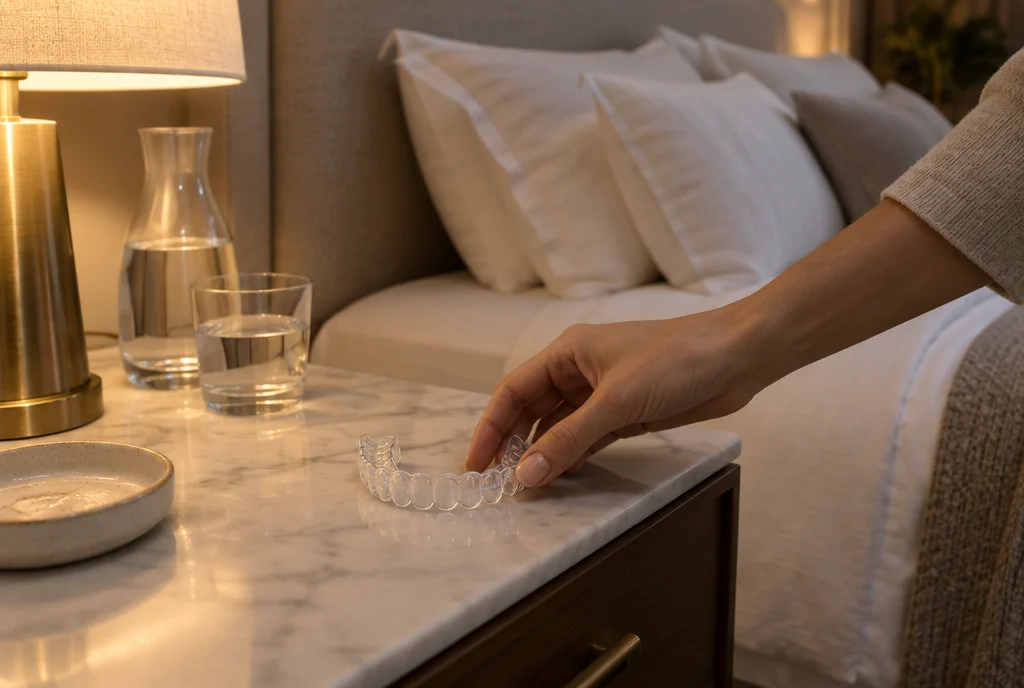
A night guard in short: a night guard is a thin, custom-fitted cover you wear over your teeth while you sleep. It doesn’t stop you from grinding, but it takes the wear so your teeth don’t, and it can ease the strain on sore jaw muscles. A sports mouthguard is a different appliance: thicker and cushioned, built to absorb a hit rather than to be slept in.
Most people who grind their teeth don’t know they do it. It happens in your sleep, and the first sign is often something Dr. Robert L. Harrell or one of our hygienists spots at a checkup: flattened edges, small chips, or enamel worn thin in a pattern that only grinding makes. Here’s how to tell if you might be grinding, what a night guard can and can’t do, and how to choose one.
Signs You Grind or Clench Your Teeth
-
A sore or tight jaw on wakingYour jaw feels tired, or it’s hard to open wide first thing in the morning.
-
Morning headachesA dull ache around the temples that fades as the day goes on.
-
Flat, chipped or worn teethEdges look shorter or flatter, or a filling keeps breaking.
-
Sensitive teethCold drinks sting where the enamel has worn thin.
-
Grinding sounds at nightThe person you share a room with hears it before you notice anything.
-
Clicking in the jaw jointA pop or click in front of your ear when you open and close.
Estimates from StatPearls, Bruxism Management (NCBI Bookshelf). Because grinding often goes unnoticed, these are approximate.
What Causes Teeth Grinding?
There’s rarely one cause. These are the factors most often linked to it:
- Stress and anxiety, one of the strongest links for both day and night grinding
- Sleep problems, including sleep apnea. If you snore loudly or wake up gasping, mention it to your doctor as well as to us.
- Caffeine, alcohol and smoking, especially in the evening
- Some medications, including certain antidepressants (SSRIs). Don’t stop a medication on your own; ask the doctor who prescribed it.
- Family history: sleep bruxism tends to run in families
What a Night Guard Does, and What It Doesn’t
What it does
- Puts a barrier between your upper and lower teeth
- Protects enamel, fillings, crowns and veneers from wear and chipping
- Can ease jaw muscle strain for some people
What it doesn’t do
- Cure bruxism or stop the habit itself
- Treat sleep apnea or the stress behind the grinding
- Work if it sits in a drawer: it only protects on the nights you wear it
Custom vs. Boil-and-Bite vs. Store-Bought Guards
| Custom (from your dentist) | Boil-and-bite | Stock (ready-made) | |
|---|---|---|---|
| Fit | Made to your teeth and bite | Softened in hot water and shaped at home; results vary | One size; often loose |
| Comfort for sleep | Thin and stays in place | Bulkier; may need re-fitting | Hard to sleep in |
| Bite checked | Yes, checked and adjusted at your visit | No | No |
| Good for | Nightly, long-term wear | A short-term stopgap | Occasional sports use |
The American Dental Association notes that store-bought and online night guards may not protect as well as one made for your mouth. A guard that doesn’t fit can also shift your bite or make your jaw work harder.
Getting a Night Guard at Adult Dentistry of Ballantyne
If we see signs of grinding at your exam, Dr. Harrell will show you what he’s seeing, check your jaw and bite, and talk through whether a guard makes sense for you. Your guard is made to fit your teeth in our in-house Natural Smile Dental Lab, and Dr. Harrell checks the fit and adjusts it as needed before you take it home. After that, bring it to your checkups: we look at the guard and your teeth for wear at every visit.
A guard is especially worth having if you’ve invested in your smile. Grinding is hard on veneers and on new dental crowns, and it’s a common reason teeth crack. If a tooth already hurts when you bite, read what to do about a cracked tooth.
Caring for Your Night Guard
- Rinse it every morning
Cool or lukewarm water, never hot, which can warp it.
- Brush it gently
Use a soft toothbrush. Skip gritty toothpaste, which can scratch the surface.
- Let it dry, then store it in its case
A vented case keeps it clean and away from pets, who love to chew them.
- Bring it to your checkups
We’ll clean it and check it for wear.
When to replace it: there’s no set schedule, because it depends on how hard you grind. Replace it if it cracks, wears through, feels loose or no longer fits comfortably.
Sports Mouthguards Are a Different Tool
A sports guard is thicker and cushioned to absorb a blow to the face, and it isn’t designed to be slept in. A night guard is thin and hard, made for hours of grinding pressure, not for impact. If you play a sport where a ball, stick, elbow or fall can reach your face, ask us about a custom sports guard.
Night Guard Questions
Do I need a night guard if nothing hurts?
Possibly. Grinding can wear teeth for years before it causes pain. If your exam shows wear from grinding, a guard protects what you have left.
Can I just buy a night guard at the drugstore?
You can, and a boil-and-bite guard is better than nothing for a short time. For nightly wear, a guard fitted to your teeth is more comfortable and less likely to affect your bite.
Will a night guard stop me from grinding?
No. It protects your teeth while you grind. Easing stress, cutting back on evening caffeine and alcohol, and treating sleep apnea if you have it can reduce the grinding itself.
How long does a night guard last?
It varies with how hard you grind and the material. Some last years; heavy grinders wear through them sooner. We’ll tell you when yours needs replacing.
Protect Your Teeth While You Sleep
Our custom night guards in Ballantyne are part of the general dentistry care that Dr. Harrell provides himself, from the first exam to the final fit. If you’ve noticed any of the signs above, call Adult Dentistry of Ballantyne at (704) 541-9888 or book an appointment online.
This article is general information and does not replace advice from your own dentist. Sources: ADA MouthHealthy, Teeth Grinding; National Institute of Dental and Craniofacial Research, Bruxism; Mayo Clinic, Bruxism; StatPearls, Bruxism Management.
