
Bone Grafting — Ballantyne, Charlotte NC
Bone grafting gives your new tooth a strong foundation.
Often placed at the same visit as your tooth extraction.
When a tooth is lost or removed, the jawbone beneath it can gradually shrink. Bone grafting rebuilds that support, so there is enough healthy bone to hold a dental implant. Dr. Robert L. Harrell, DDS, offers bone grafting in Ballantyne NC as part of our tooth extraction care and general dentistry services.

What Bone Grafting Means for You
A bone graft is about what comes next. It is one step in a plan built around the smile you want, not just the tooth you are replacing.
Keeps an Implant Within Reach
Even after bone loss, a graft can rebuild enough support for a dental implant.
A Natural Look at the Gumline
A fuller base helps your new tooth sit naturally and look like it belongs.
Helps Preserve Your Jaw
Grafting where a tooth is missing helps limit the bone loss that can follow.
Often Done With Your Extraction
The graft can often be placed at the same visit your tooth is removed.
One Plan, One Team
Extraction, grafting and implants are planned together, under one roof.
Comfort Options Available
The area is numbed, and sedation is available if you feel anxious.
Healing is different for everyone, and results vary from person to person.
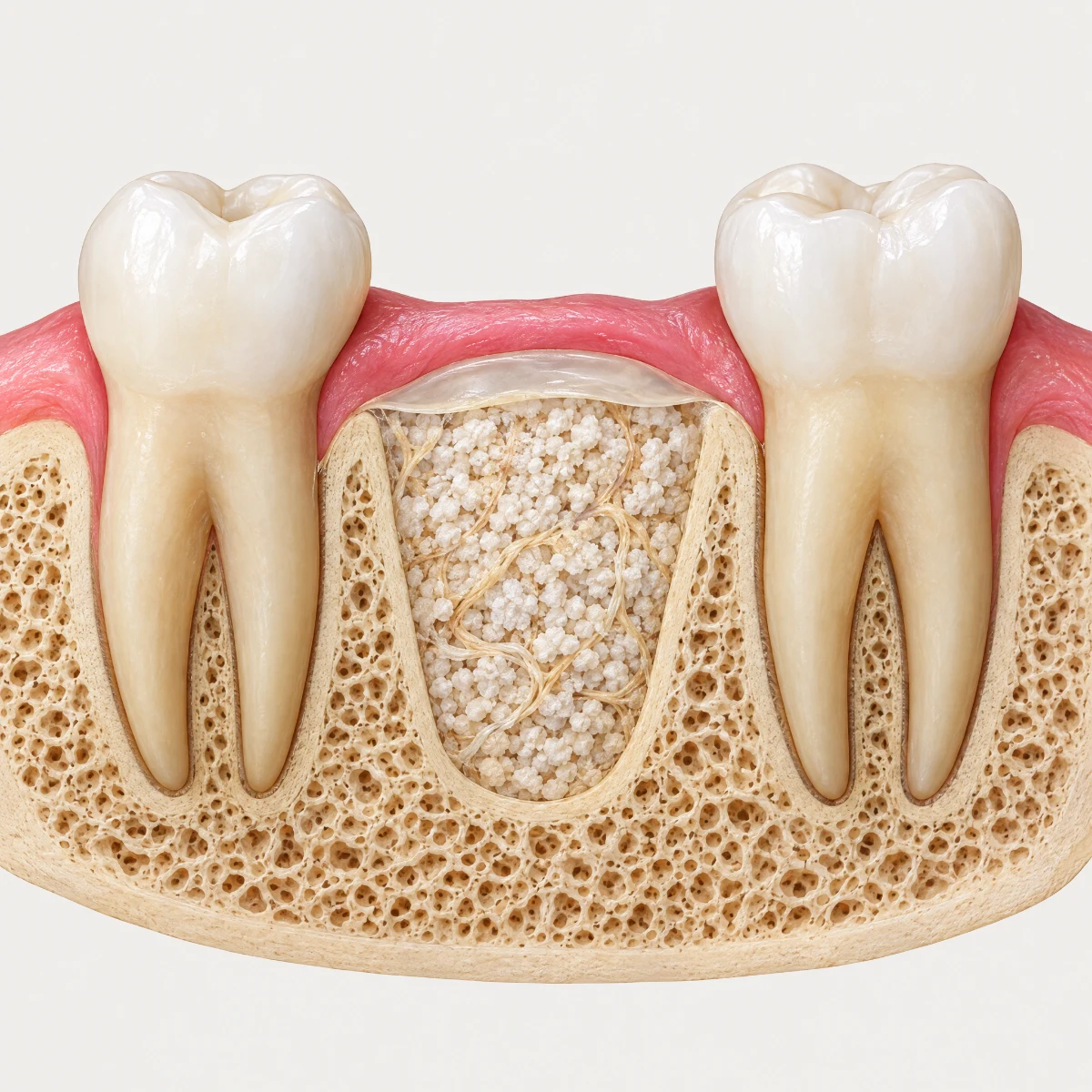
Graft materialFills the space left by the tooth so the jawbone has something to grow into.
Protective membraneA thin layer over the graft that helps keep it in place while it heals.
Gum tissueCloses over the area and protects it during healing.
New boneOver the following months, your body builds new bone around the graft.
Your jawboneThe surrounding bone that the graft joins, creating a firmer base.
Neighboring teethKeeping the bone full helps support the teeth on either side.
What Bone Grafting Is, and When It Helps
Bone grafting adds graft material to an area of the jaw where bone has been lost. Over time, your body builds new bone around that material, creating a firmer, fuller base.
In general dentistry, it is most often used to prepare a site for a dental implant, or to help preserve the bone right after a tooth is removed. When a graft is placed in the empty socket at the time of an extraction, it is sometimes called socket preservation.
When a Bone Graft May Be Recommended
Dr. Harrell checks your jawbone with an exam and imaging, and recommends a graft only when there is not enough bone to support what comes next.
Placing a graft in the empty socket helps hold the space and limit bone loss while it heals.
If bone has been lost where the tooth used to be, a graft rebuilds enough support for the implant.
The jawbone can shrink after a tooth is lost. A graft can help restore what is needed.
Gum disease can wear away the bone around teeth. Grafting can help rebuild it.
As the jaw changes, a denture can loosen. Rebuilding bone can open up implant options.
Platelet-rich fibrin (PRF) is made in our office from a small sample of your own blood. It can be placed at extraction and bone graft sites to support healing of the gums and bone.

Bone Graft Healing and Aftercare
We give you written instructions before you leave, and our post-operative instructions are always available online. In general, to help your graft heal:
- Take any medication exactly as directed
- Stick to soft foods and chew away from the graft site
- Avoid smoking, drinking through a straw and spitting forcefully
- Keep the area clean as instructed, rinsing gently
Call us at (704) 541-9888 if you notice increasing pain, swelling or anything that concerns you.
Common Questions About Dental Bone Grafting
The area is numbed before treatment, so you should feel pressure rather than pain during the procedure. Some soreness and swelling afterward is normal and is usually managed with the medication Dr. Harrell recommends. Sedation is available if you feel anxious.
The gums usually settle within a couple of weeks, while the bone itself takes several months to mature. Healing time depends on the size of the graft and your overall health, so Dr. Harrell will give you a timeline for your case.
Once it has healed, the graft is designed to become part of your jawbone and support your implant over the long term. Good home care, regular checkups and not smoking help protect it.
Not always. It depends on how much healthy bone there is at the implant site. Dr. Harrell checks this with an exam and imaging, and recommends a graft only if there is not enough bone to support the implant.
The cost depends on the size and type of graft, and on whether it is done with an extraction or an implant. We will give you a clear estimate at your consultation, and payment plans are available.
Coverage varies from plan to plan. Some plans treat grafting as part of implant care, which they may not cover. It is worth checking with your insurer, and bringing your plan details to your consultation.
For the first few days, avoid smoking, drinking through a straw, spitting forcefully and chewing on the graft site. Stick to soft foods and follow the instructions we give you.
Often, yes. Placing the graft right after the tooth is removed can help preserve bone while the site heals, and PRF can be added at the same visit.
