
Fluoride Treatments — Ballantyne, Charlotte NC
Extra protection
for adult enamel,
added after your cleaning.
A fluoride treatment is a quick application after your cleaning that helps strengthen enamel and prevent new decay. Dr. Robert L. Harrell, DDS, offers it with your teeth cleaning when it will help, one of our general dentistry services in Ballantyne NC.
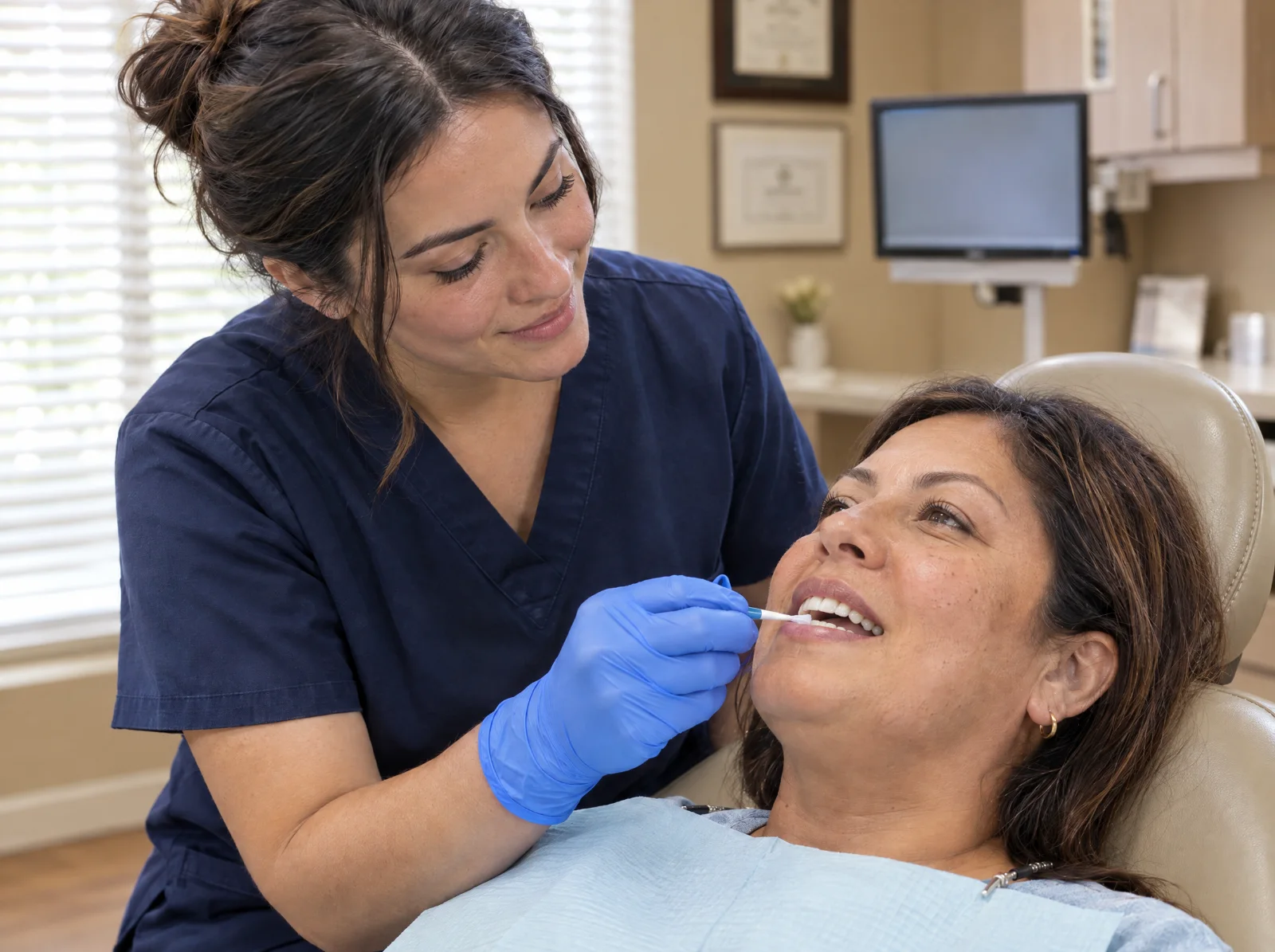
Fluoride for Adults: Where It Comes From
Fluoride reaches your teeth in a few ways. A professional treatment is the step for teeth that need more help.
-
Step 1

Tap water
If your home is on Charlotte Water, your tap water has fluoride. If you have a well, testing a sample shows how much fluoride your water has.
-
Step 2
Toothpaste
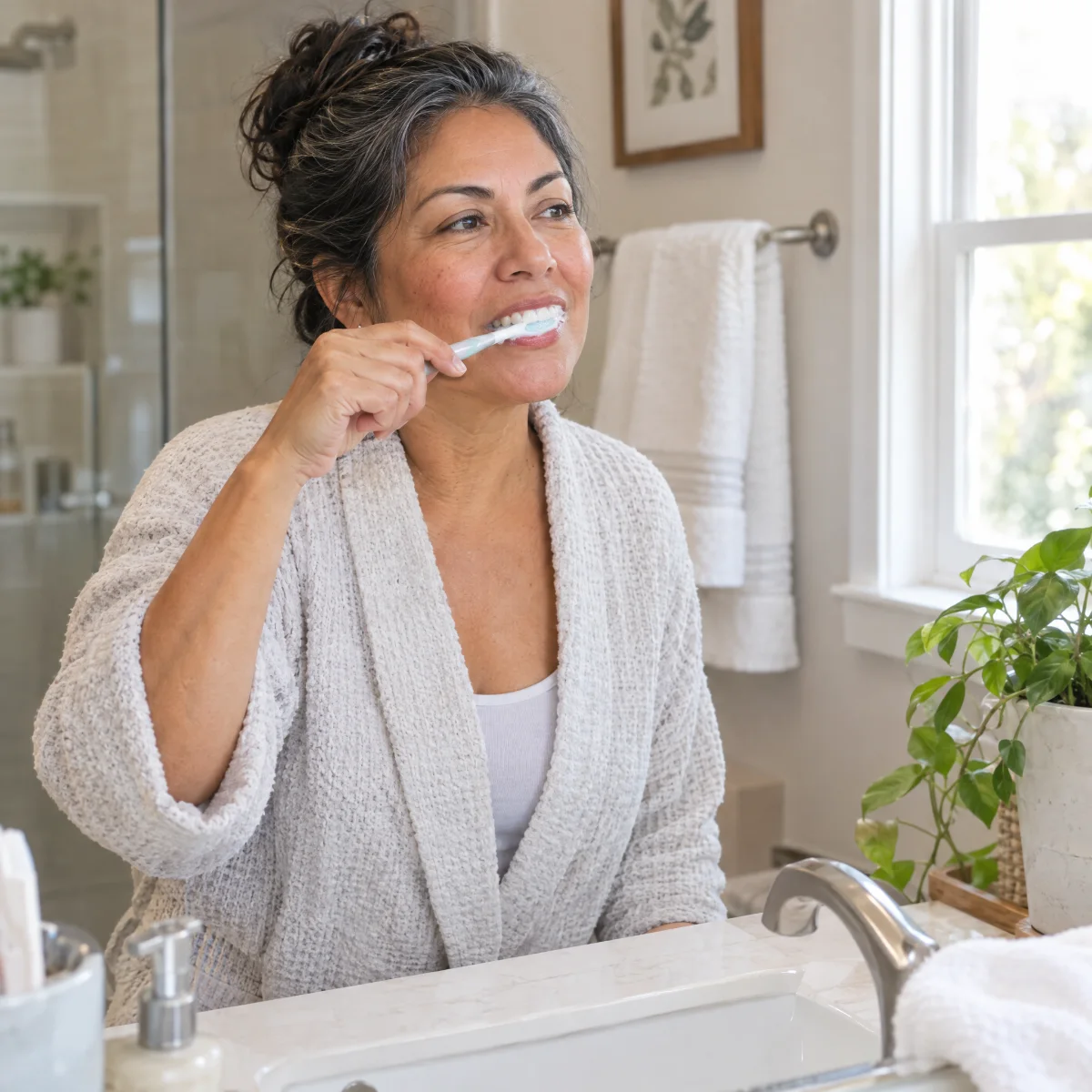
Brushing at least twice a day with fluoride toothpaste leaves fluoride on your teeth and in your saliva, which helps rebuild the outer layer of enamel.
-
Step 3
A professional treatment
A fluoride gel, foam or varnish applied after your cleaning, for adults with a higher chance of new decay.

The Daily Tug-of-War
Every day, your enamel loses and regains minerals. Acids formed from bacteria, plaque and sugars in your mouth pull minerals out. Fluoride, calcium and phosphate help put them back.
MineralsAcidsHarder outer enamel
Acids pull minerals out of the enamel.Fluoride helps replace lost minerals and makes the outer enamel harder for acid to dissolve.

How Fluoride Varnish Is Applied
The treatment is quick and painless, and it is done right after your cleaning.
Clean and dry
After your cleaning, your hygienist dries your teeth. (ADA)
Paint it on
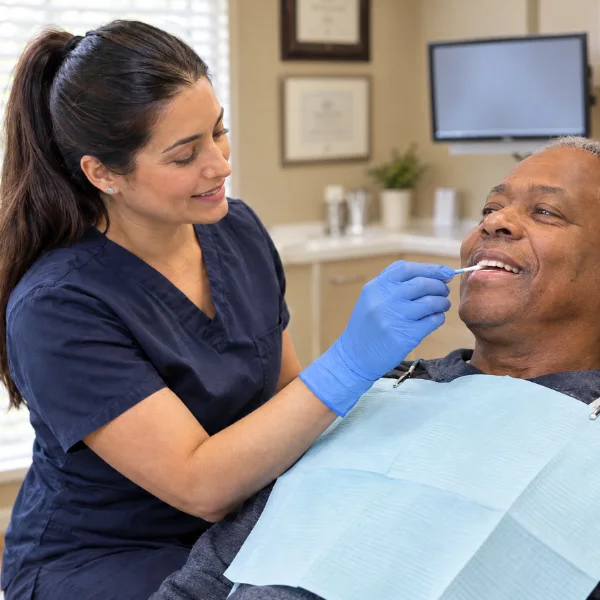
A thin layer of fluoride varnish is painted onto your teeth with a small brush. Gel or foam is placed in a tray that fits over your teeth instead. (ADA · Cleveland Clinic)
It stays in place
The varnish keeps a small amount of fluoride against your teeth for many hours, then wears away. It does not permanently stick to the tooth. (CDC)
Afterward
Eating, drinking and brushing should be delayed for a while. Your hygienist will tell you how long. (ADA)
What Happens at Your Visit
Your cleaning
Your hygienist cleans and polishes your teeth, and Dr. Harrell checks how your teeth and gums are doing. (Teeth Cleanings)
Fluoride, if it will help
Your hygienist applies the fluoride, as shown above. It typically takes less than five minutes. (Cleveland Clinic)
Back to your day
Ask us any questions about caring for your teeth afterward.
Questions About Fluoride Treatments
Not every adult needs one. Adults can especially benefit from fluoride with dry mouth, gum disease, a history of cavities, or crowns and bridges. The ADA recommends professional fluoride for adults at higher risk of decay. (Cleveland Clinic · ADA)
Many people benefit from a fluoride treatment every six months, and adults who are prone to cavities might benefit from more frequent treatments. Dr. Harrell will recommend what fits you. (Cleveland Clinic)
Health experts consider fluoride safe and effective when used at recommended levels. (Cleveland Clinic)
Charlotte Water's 2025 water quality report says it fluoridates at 0.7 ppm. If you have a well or a different water system, your water may differ. (Charlotte Water)
Typically less than five minutes, right after your cleaning.
Ask your hygienist at your visit how long to wait before eating or drinking.
